


Buccal Fat Removal Recovery: Swelling, Eating and When Results Settle

Updated: 3 hours ago

A slimmer cheek isn’t always a younger-looking one. Buccal fatremoval is surgery that reduces fullness in the cheek hollows by removing part of the naturally occurring fat pads inside the cheeks. Healing usually takes about three weeks, while the final contour can take several months to emerge as swelling settles.
It’s understandable to wonder whether fuller cheeks make your face look rounder. Buccal fat also contributes to natural facial softness, and removing it creates a lasting change. Suitability depends on your facial structure and how it may change with age. The procedure is performed through incisions inside the mouth, and recovery involves managing swelling, eating comfortably and caring for the healing incisions.
This guide explains what happens during surgery, how eating and everyday activities may change during recovery, and why the visible result takes time to settle. It also outlines key risks and how an assessment of cheek fullness can help preserve a balanced, natural-looking appearance.
Table of Contents
What is buccal fat removal?
Buccal fat removal reduces fullness in the cheek hollows by surgically removing part of the naturally occurring fat pads. The aim is to refine the lower cheek contour, not simply make the whole face smaller. Because the removed pads don’t grow back, consider how the change fits your facial proportions and the fullness you may want to retain over time.
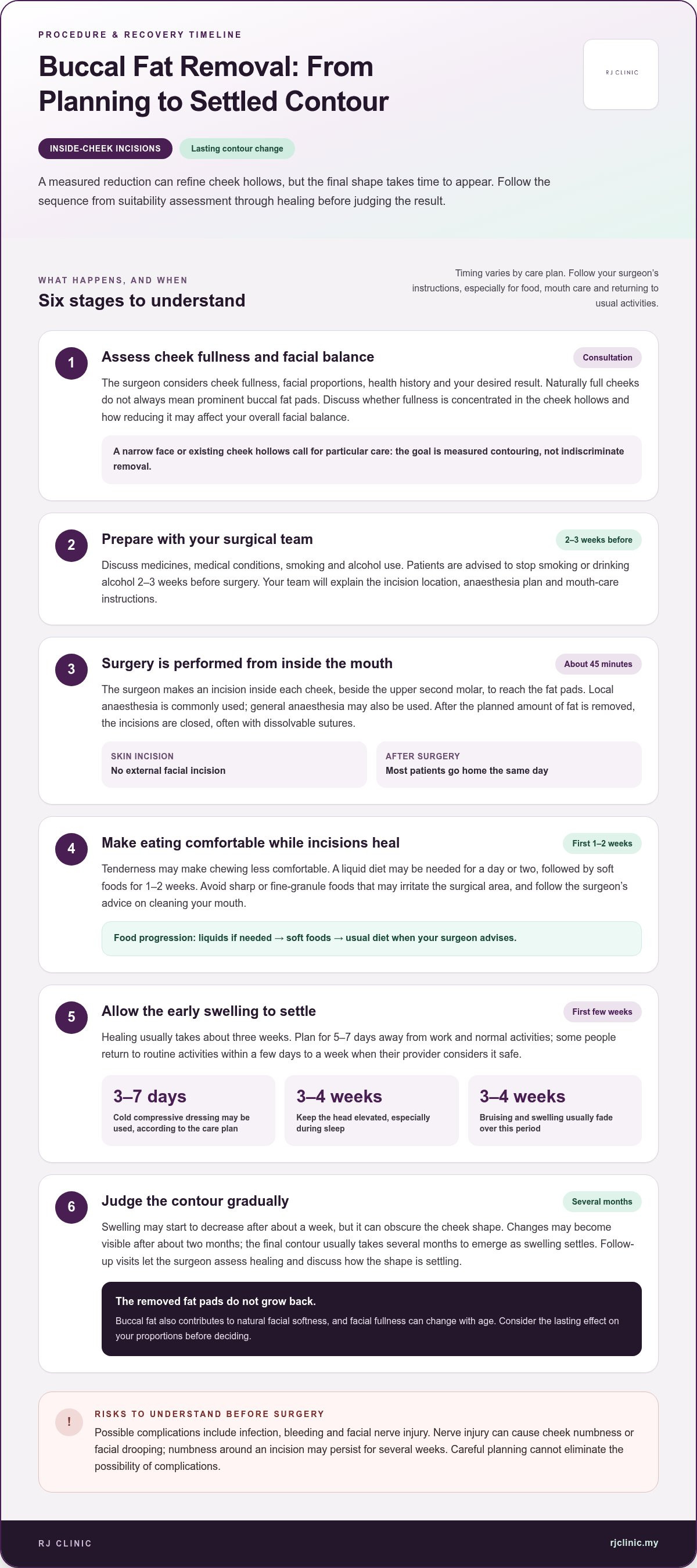
Healing usually takes about three weeks, but visible recovery happens in stages. Swelling may start to decrease after about a week; bruising and swelling usually fade after 3-4 weeks. Tenderness can make chewing less comfortable, so patients may need liquids for a day or two, followed by soft foods. A soft diet is advised for 1-2 weeks while the incisions heal.
Plan for 5 to 7 days away from work and normal activities. Some people return to routine activities within a few days to a week, when their provider considers it safe. Head elevation, especially during sleep, is advised for 3-4 weeks. A cold compressive dressing may be used for 3-7 days after surgery, according to the care plan.
Early swelling can obscure the contour. Changes may become visible after about two months, while final results usually take several months to emerge. Follow-up visits allow the surgeon to assess healing and discuss how the shape is settling. This gradual timeline is important to consider because buccal fat removal creates a lasting change, not a temporary adjustment.
Recovery is also a chance to reflect on the intended outcome. If you’re considering buccal fat removal, ask whether the fullness is concentrated in the cheek hollows and how reducing it may affect your overall facial balance. For details on the buccal fat removal procedure, review how the surgical approach relates to your priorities before deciding.
Recovery from buccal fat removal surgery typically takes about two to three weeks, though swelling, bruising or discomfort usually eases within a week or two. Facial swelling starts to subside after about a week, and results may become visible after about two months as swelling fades. Patients can usually return to normal activities after a few days to a week, when their provider says it is safe. Follow your provider’s guidance as you heal.
How buccal fat removal surgery is performed
The surgeon reaches the fat pads through the inside of each cheek, so there is no external facial incision. Your consultation, anaesthesia choice and mouth-care plan help shape preparation and recovery.
Consultation and Preparation
The consultation assesses cheek fullness, facial proportions, health history and your desired result. Naturally chubby cheeks don’t always mean prominent buccal fat pads, and removing too much can alter facial balance. A plastic surgeon considers whether the cheek hollow is suitable for refinement and discusses how the procedure and healing may affect your features.
Preparation includes discussing medicines, medical conditions and smoking or alcohol use with the surgical team. Patients are advised to stop smoking or drinking alcohol 2-3 weeks before surgery. This advance planning gives the team time to consider relevant risks and explain instructions for the day of surgery. It also helps you understand the expected incision location and mouth-care routine before treatment.
Surgical Steps and Anaesthesia
The surgeon makes an incision inside each cheek, adjacent to the top second molar tooth, to reach the fat pads. The procedure typically takes about 45 minutes. Local anaesthesia is commonly used, although general anaesthesia may also be used. The choice affects what you experience during surgery, so the surgeon explains the planned approach beforehand.
After removing the intended amount of fat, the surgeon closes the incisions, often with dissolvable sutures. Because the openings are inside the mouth, they don’t leave scars on the facial skin. Most patients go home the same day. Knowing what to expect can help you plan transport and a restful first day while your mouth begins to heal.
After surgery, follow the prescribed mouth-care instructions and choose gentle foods. A liquid diet may be needed for a day or two, followed by soft foods for one to two weeks. Softer textures can make chewing more comfortable while the incisions heal. Avoid sharp or fine-granule foods that may irritate the surgical area, and follow the surgeon’s advice on cleaning your mouth.
When choosing a plastic surgeon, consider their understanding of cheek anatomy, facial nerves and natural facial variation. A narrow face or existing cheek hollows call for particular care: the goal is measured contouring, not indiscriminate removal of fullness. Ask how the planned amount relates to your facial proportions and which recovery instructions apply to you.
For a closer look at the surgical approach to cheek fat removal, review how the incision and treatment plan relate to your priorities before making a decision.
Infection, bleeding and nerve damage risks
What are the risks and complications of buccal fat removal? They include infection, bleeding and injury to facial nerves. Nerve injury can cause cheek numbness or facial drooping, and numbness around an incision can persist for several weeks.
These risks matter because the surgeon operates through incisions inside the cheeks, near delicate facial structures. Anaesthesia and careful surgical planning are part of the procedure, but they cannot eliminate the possibility of complications. Before deciding, understand what the operation involves and how its risks relate to your priorities for cheek reduction.
Infection and bleeding are concerns with any surgery. The incision is made inside the mouth to reach the fat pad, so healing involves tissue in an area used for eating and speaking. Follow your post-operative instructions for mouth care and food. A liquid diet for a day or two, followed by soft foods, can reduce chewing demands as the incisions begin to heal.
Facial nerve injury deserves specific discussion. It can lead to numbness or facial drooping, and cheek numbness may be temporary or permanent. Numbness around the incision can also last several weeks. These effects differ from ordinary early swelling: changes in sensation or movement involve nerves, not just the visible cheek hollow.
The cosmetic trade-off matters too. Removed buccal fat pads don’t grow back, so the reduction is permanent. A hollow that looks subtle at first can become more pronounced as natural facial fullness diminishes with age. People with narrow faces may be poor candidates because further cheek reduction can create a gaunt appearance over time.
A careful assessment weighs your existing cheek shape, the amount of fullness in each fat pad and the position of nearby facial nerves. The pads can differ in size between cheeks, so both facial symmetry and the planned removal matter. If you want a modest change, understand that removing too much can work against that goal, while leaving more tissue preserves fullness.
Before surgery, discuss infection, bleeding, numbness and facial movement with the surgeon. Ask how the incision will be planned, what reduction is intended and which changes are part of normal healing. Clear answers help you weigh a lasting contour change against the possibility of complications, rather than focusing only on slimmer cheeks.
Buccal fat and natural facial fullness
Cheek fullness is not simply excess tissue to remove. Buccal fat pads are naturally occurring fat within the cheek hollow, and their size varies between people. The pads on the left and right sides of one person’s face can also differ. This variation helps explain why two faces with similar roundness may have different underlying structures and respond differently to reduction surgery.
A softly filled face is often associated with youthfulness. Buccal fat contributes to that natural fullness, while its gradual reduction with age can make the cheeks look less rounded. Removing some of the pads changes the contour in the cheek hollows, but it also permanently reduces tissue that might otherwise support facial softness later. Consider both the appearance you want now and how your natural fullness may change over time.
People often describe their cheeks as chubby, but that alone doesn’t show whether buccal fat is the cause. Fullness may be distributed differently across the face, and the fat pads aren’t always equal in size. The key question is whether fullness in the specific cheek hollow matches the change you want. A careful facial assessment distinguishes the location of fullness from a general wish for a slimmer appearance.
Facial shape is especially relevant if you have a naturally narrow face or existing hollows. Removing cheek fat where there is little fullness can create a more gaunt appearance as ageing continues to reduce natural facial volume. This is why people with thin, narrow faces may not be good candidates. A youthful-looking cheek is not defined only by sharp angles; retained fullness can also contribute to balance.
Age matters because the face continues to change. People are generally advised to wait until ages 18-20 before considering this surgery. Even after that point, age alone doesn’t establish suitability. The existing cheek shape, natural fullness and likely effect of permanent fat removal all inform whether the expected contour makes sense for that face.
A useful decision-making step is to compare the cheek hollow with the rest of your facial proportions, rather than focusing only on roundness in a single photograph. Buccal fat pads differ between people, and their natural reduction with age makes restraint important. The clearest takeaway is that cheek fullness can be part of a youthful, balanced appearance, not merely a feature to eliminate. To discuss whether cheek contour refinement suits your facial structure, arrange an assessment focused on your goals and natural proportions.
RJ Clinic: Face Slimming Treatments
RJ Clinic offers Face Slimming Treatments for people considering a more refined facial contour. If your concern is fullness localized to the cheeks, the buccal fat removal page provides relevant context for understanding this surgical approach alongside your facial goals.
A consultation can help clarify which feature you want to address and whether face slimming aligns with your priorities. The focus should be your overall facial balance, not simply making your cheeks smaller.
If you’re considering a next step, contact RJ Clinic to discuss your concerns and treatment goals.
Make your next decision with your whole face in mind
Deciding whether buccal fat removal aligns with your goals means considering how you want your features to work together. Before choosing a procedure, define what you hope to change and what you want to preserve. That clarity can make a discussion about facial refinement more focused and personal.
Rather than deciding from a single photograph or trend, bring your priorities and questions to an individual assessment. A considered conversation can help you weigh your aims and decide what feels right for you.
Contact RJ Clinic to discuss your goals, and take your next step at a pace that feels considered.
FAQs
Are there other ways to achieve a slimmer face?
Yes, but the right approach depends on which feature creates the fullness you notice. Start by identifying whether your concern centres on your cheeks or another part of your facial shape. This distinction helps you compare approaches without assuming that removing cheek fat is the only way to achieve a more refined appearance. A doctor assessment is required before proceeding, and not every treatment is appropriate for every patient.
What happens after this procedure?
After the operation, follow your written care plan and keep your follow-up appointments. Note questions or changes as they arise so you can discuss them at your review. If something about your healing concerns you, contact the surgical team for advice. This keeps care decisions grounded in your own progress, rather than comparisons with someone else’s recovery or online photographs.
When can I go back to work, school, drive or eat?
Plan your return to daily activities around your recovery instructions and usual routine. A desk-based day, a school schedule and physically active work each place different demands on you, so consider what you’ll need to manage comfortably. Arrange transport home rather than assuming you’ll be ready to drive. For meals, follow the instructions provided for your healing incisions and progress at the pace advised by your surgical team.
What does cheek fat surgery change, and who might suit it?
This surgery reduces fullness in the cheek hollows by removing some of the naturally occurring fat there. Suitability depends on whether that specific fullness matches your concern and whether the proposed contour fits your features. Before deciding, describe the change you want in your own words and discuss what you’d prefer to preserve. A doctor assessment is required before proceeding, because the same cheek shape can mean different things to different patients.
How is the operation performed, and how long does it take?
The surgeon reaches the cheek fat through incisions inside the mouth, and the operation typically takes about 45 minutes. At your planning discussion, clarify the intended contour, anaesthesia approach and what will happen on the day. It’s also useful to explain any concerns about symmetry or how much fullness you want to retain, so the conversation addresses your goals rather than focusing on time alone.
What is the recovery timeline after cheek surgery?
Recovery has an early healing phase, followed by a slower period as the cheek contour becomes clearer. Swelling can make day-to-day comparisons misleading, so don’t judge the settled appearance from a single early photo. If you take progress pictures, use similar lighting and angles each time. Discuss changes at follow-up rather than making decisions based on temporary differences in expression, lighting or swelling.


Comments